Business Insurance
How to Read a Commercial Insurance Policy
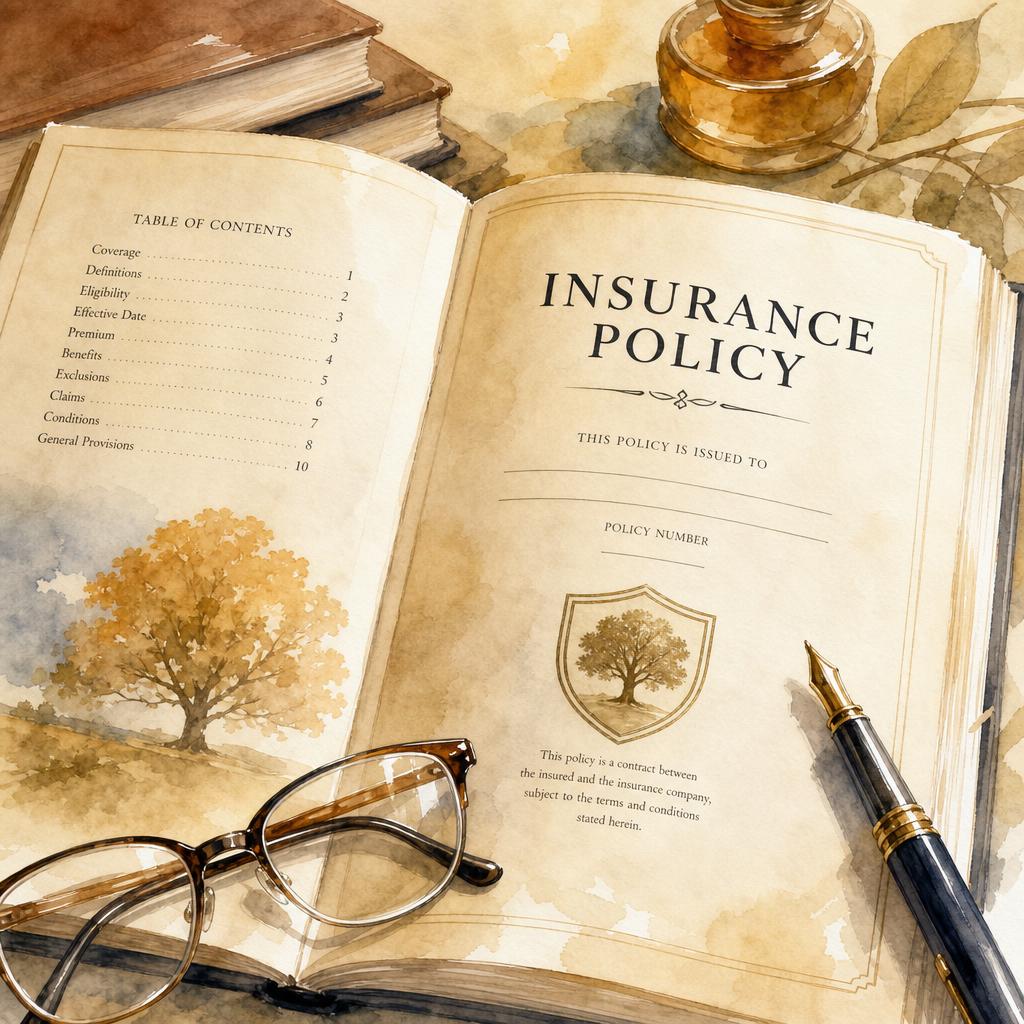
Commercial insurance policies are dense, technical documents — and they're written to define the exact boundaries of coverage, not to make reading easy. Knowing how they're structured and where the important provisions live can help you have a more informed conversation with your advisor and avoid surprises when a claim arises.
The Policy's Anatomy
Most commercial policies share a common structure, even when the specific forms vary by insurer:
- Declarations page (Dec page) — the summary. Named insured, policy period, coverage limits, deductibles, and premium. This is the page most business owners look at; it's the starting point, not the whole picture.
- Coverage forms — the substantive documents that define what's covered, how it's covered, and under what conditions claims are paid. These are the pages most business owners don't read.
- Endorsements — modifications to the coverage forms. They can add coverage, restrict coverage, or change definitions. Endorsements matter enormously and are easy to overlook.
- Conditions — the obligations you must meet to maintain coverage and receive claim payments. Reporting requirements, cooperation clauses, and notice provisions live here.
- Exclusions — what the policy does not cover. Understanding exclusions is as important as understanding what is covered.
The Insuring Agreement Is Where Coverage Lives
Every coverage form contains an insuring agreement — a statement of what the insurer promises to pay. It looks like this: "We will pay those sums that the insured becomes legally obligated to pay as damages because of bodily injury or property damage to which this insurance applies."
The insuring agreement is broad by design. Coverage is then narrowed by the exclusions and conditions that follow. Reading the insuring agreement alone gives you an overly optimistic picture of your coverage.
How to Navigate Exclusions
Exclusions are where coverage disputes live. Common commercial property exclusions include flood, earthquake, ordinance or law (costs to bring a rebuilt structure up to current code), and mechanical breakdown. Common general liability exclusions include professional services, pollution, and expected or intended injury.
The important skill is knowing that an exclusion often has exceptions — language that carves back coverage for specific circumstances. Reading "we do not cover X, except for Y" completely is essential. The "except for Y" may be exactly what applies to your situation.
Pay Close Attention to Definitions
Insurance policies define terms specifically — and the definition is often different from the plain English meaning. "Occurrence," "bodily injury," "property damage," "your work," and "your product" all have defined meanings that affect coverage. When you read a coverage provision, track down the definitions of the capitalized terms. The answer to a coverage question often lives in a definition.
What to Ask Your Advisor
You don't need to read every line of a complex policy. But you should understand the key coverage grants, your limits and deductibles, the most significant exclusions, and any endorsements that modify coverage. Ask your advisor to walk you through these elements in plain language — and to flag anything that requires you to take a specific action to preserve coverage.