
Risk Management
5 Risk Management Strategies Every Manufacturer Should Know
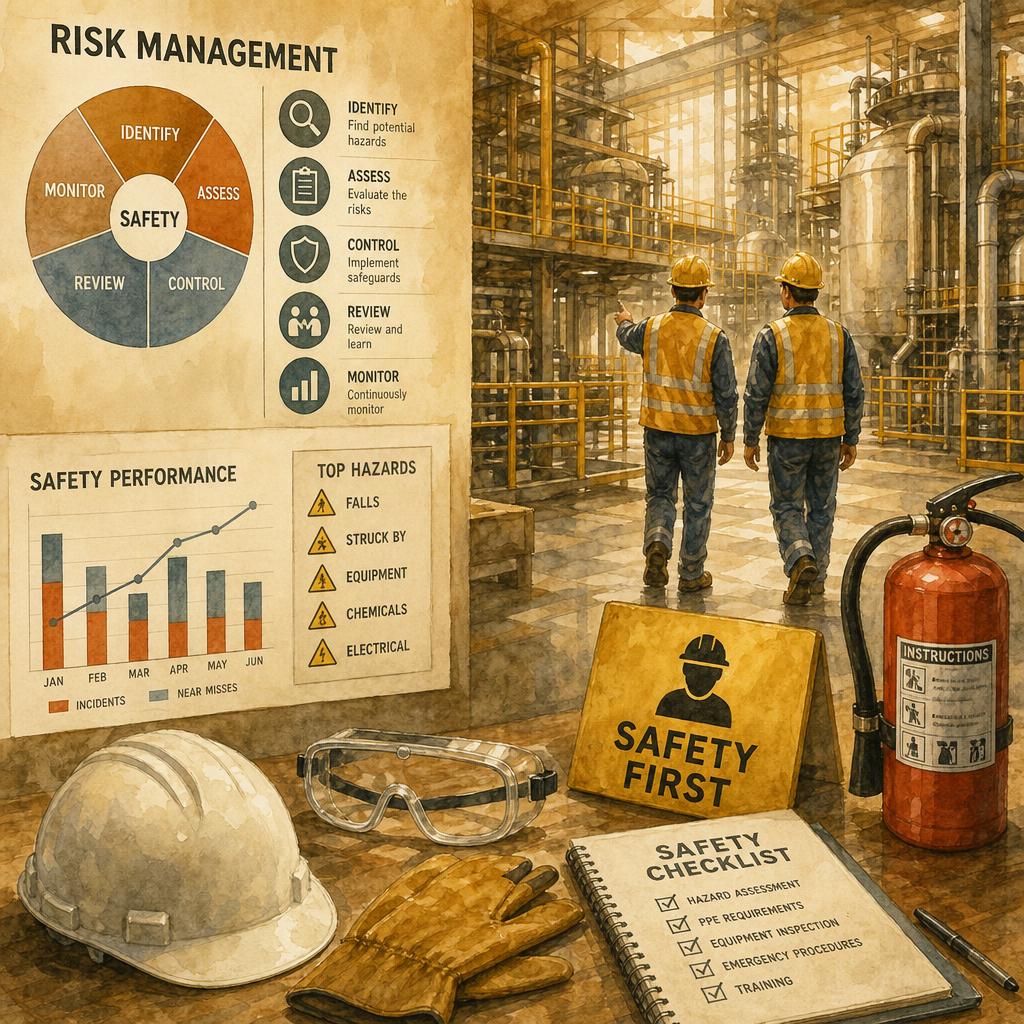
Manufacturing is inherently risk-intensive. Machinery breaks down. Supply chains get disrupted. Products fail in the field. A single serious incident can halt operations for days — or expose the business to claims that dwarf the cost of prevention. Here are five strategies that separate resilient manufacturers from reactive ones.
1. Map Your Exposures Before You Buy Coverage
Most manufacturers buy insurance reactively — renewing what they had last year with minor adjustments. A proper risk management program starts with a systematic exposure inventory: every location, every piece of equipment over replacement cost threshold, every product line, every contract with a hold-harmless clause.
This process routinely surfaces gaps. A facility added two years ago that was never added to the property schedule. A new product category that carries different liability than the existing line. A contract that requires higher limits than you're carrying. The inventory is the foundation everything else is built on.
2. Address Equipment Breakdown Before It Happens
Equipment breakdown coverage is underutilized and undervalued. Standard property policies exclude mechanical and electrical breakdown — they cover the fire that starts because of the breakdown, but not the breakdown itself or the business income lost while the machine is down.
For manufacturers, a major equipment failure can be more financially damaging than a fire. Boilers, presses, CNC machines, and cooling systems represent significant replacement values and, more importantly, significant revenue if they go offline. Equipment breakdown coverage pairs with a proper maintenance program to transfer this risk appropriately.
3. Build a Supply Chain Contingency Plan
Contingent business interruption is the coverage designed for supply chain disruption — losses you suffer when a key supplier or customer is impacted by a covered event. But coverage alone isn't enough. You need to know, before a disruption happens, which suppliers are single-source, what your inventory buffer is for critical inputs, and how long it would take to qualify an alternative supplier.
The contingency plan and the insurance coverage should be designed together. The coverage responds to documented losses; the plan minimizes those losses in the first place.
4. Manage Product Liability Systematically
Product liability exposure grows with your product's reach. A component that goes into safety-critical applications carries very different liability than a decorative part. As your customer base expands geographically, your policy limits and jurisdiction coverage need to keep pace.
Documentation is as important as coverage. Quality control records, testing protocols, specification change logs, and complaint handling procedures all matter enormously in defending a product liability claim. An advisor who understands your operation will help you see these connections.
5. Review Your Contracts as Risk Transfer Documents
Every customer contract and vendor agreement you sign is a risk transfer document. Indemnification clauses, additional insured requirements, and limitation-of-liability provisions can either protect you or expose you — often without the operations team realizing it.
A contract review protocol — where significant new agreements are checked against your insurance program before signing — prevents the uncomfortable discovery that you've agreed to something your policy doesn't cover.